

Study Areas
The study uses a multi-scale design spanning community, state, regional, and national levels. Analyses will be tailored to the research objectives, study purpose, and data availability, with a primary emphasis on the U.S. Southeast—particularly Tennessee and South Carolina. Our focal communities include Knoxville and Chattanooga, Tennessee (TN), and Charleston, South Carolina (SC). Findings from these local case studies will be scaled to state, regional, and national levels to evaluate the health and resilience co-benefits of weatherization (Wx) and community microgrid adoption.
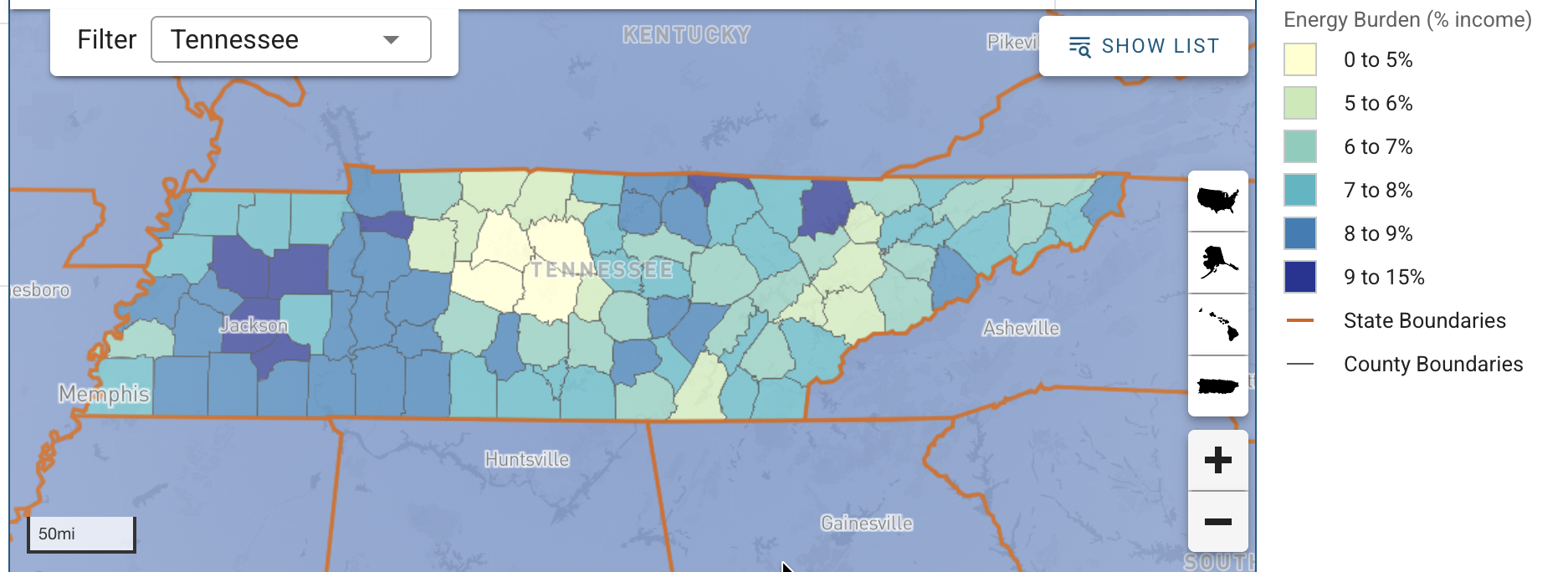
Explore data source:
U.S. Department of Energy LEAD (Local Energy Action Dashboard)State of Tennessee
Following the Center for Neighborhood Technology (CNT) housing cost-burden threshold, we define low- and moderate-income (LMI) households as those with incomes at or below 80% of area median income (AMI).
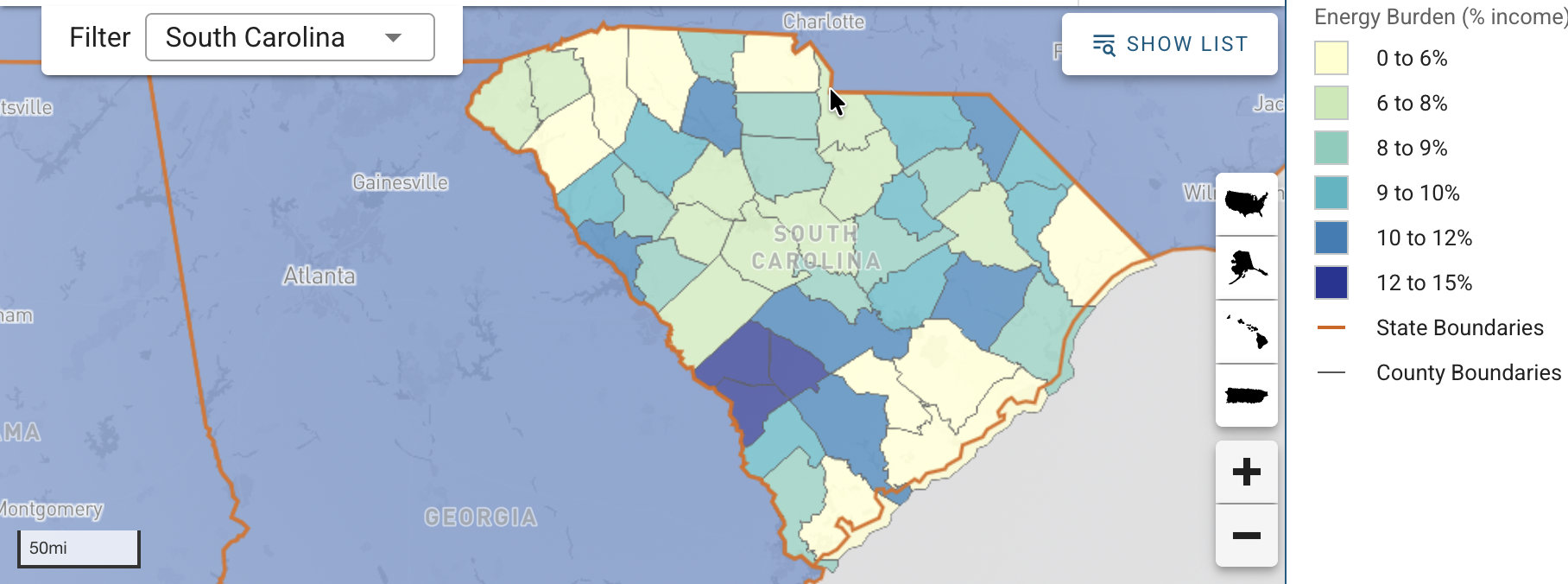
Explore data source:
U.S. Department of Energy LEAD (Local Energy Action Dashboard)State of South Carolina
South Carolina faces substantial combined coastal and inland climate risks, with sea level rise, tidal flooding, and extreme precipitation posing long-term pressures on coastal counties.
Additional study areas coming soon as research expands.