

Overview
Thrust 1 examines how home electrification and weatherization affect indoor air quality, energy costs, and health outcomes in low- and moderate-income communities. We combine data analysis, economic and feasibility studies, surveys, focus groups, and health impact modeling to understand both the benefits and challenges of clean energy transitions at the household level.
Research Focus & Methods
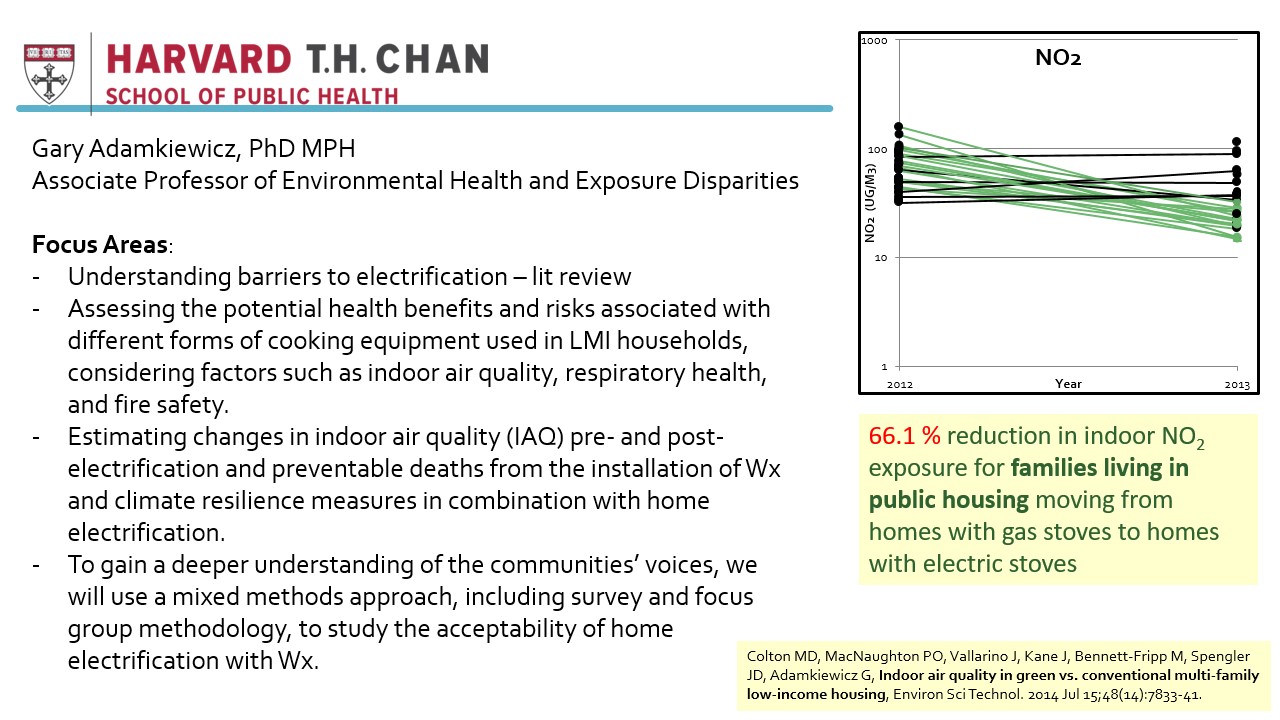
- Analyzing indoor air pollution (PM2.5, VOCs, and CO₂)
- Evaluating costs and practicality of electrification
- Assessing changes in utility bills
- Estimating potential health improvements before and after home upgrades
- Studying community perspectives on weatherization programs
- Analyzing health impacts of power outages with focus on energy burden and medical costs
Key Themes
Current Work
Our work includes analyzing indoor air pollution (such as PM2.5, VOCs, and CO₂), evaluating the costs and practicality of electrification, assessing changes in utility bills, and estimating potential health improvements before and after home upgrades. We also study community perspectives on weatherization programs and the health impacts of power outages, with a focus on energy burden and medical costs.
Policy & Community Relevance
Together, these efforts provide evidence to guide equitable electrification strategies and inform policy and program design that better support vulnerable households.
Visualizations
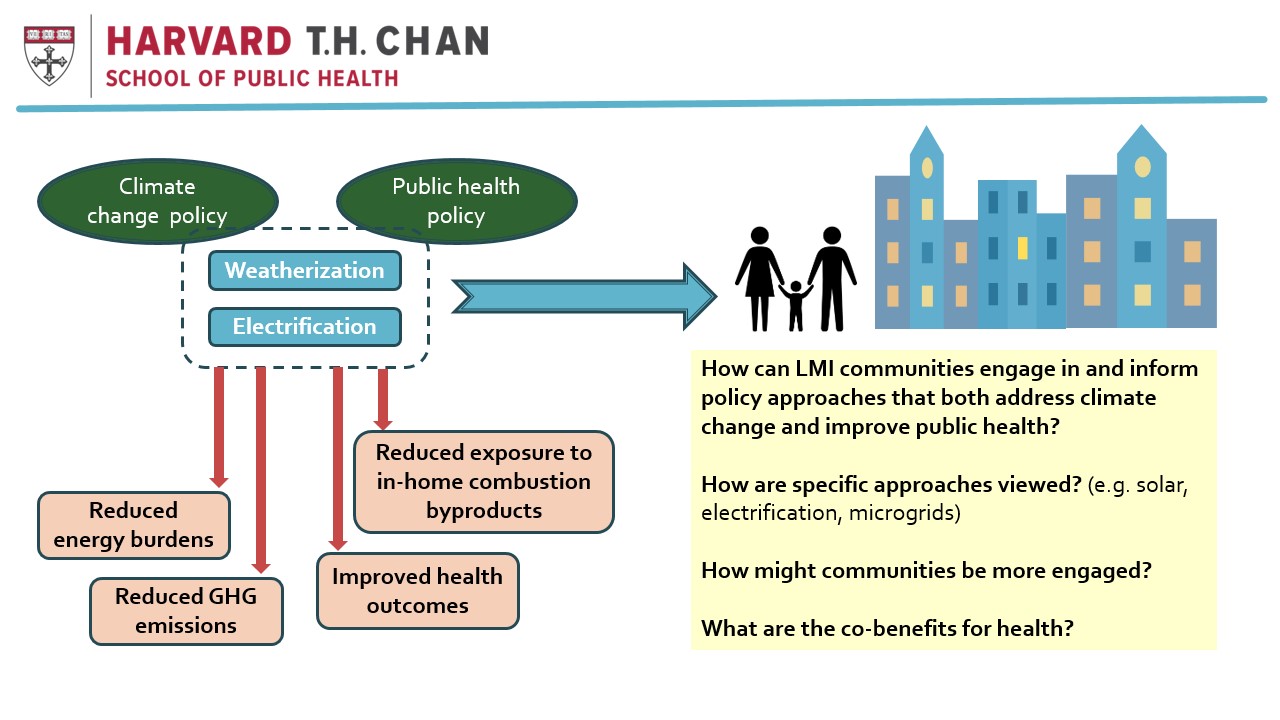
Electrification and weatherization reduce indoor air pollution, energy burden, and greenhouse gas emissions while improving health outcomes in low- and moderate-income households.